
Find what is blocking value before you invest more in AI.
We start with AI adoption, helping you see where AI is creating value, where it is falling short, and what is getting in the way. GrundMind shows you where workflows, capabilities, knowledge and governance in your organization are holding back results. Our approach is highly personalized to your organization, your priorities and the decisions you need to make. With minimal input from your teams and a secure, confidential process designed to protect your data, we do the heavy lifting to uncover where value is being lost and where your next investment can make the biggest difference.
Which challenge sounds most familiar?
Select what you are trying to solve to see how we can help.
We are about to invest in AI.
Understand if you are ready and where the value is.
MOST COMMONWe already use AI, but ROI is unclear.
Find what is working, what is not, and why.
REGULATORYWe need to prepare for the EU AI Act.
Identify gaps and get organization-ready.
NEXT STEPWe want to use AI agents, but our knowledge is fragmented.
Assess and prepare your knowledge for AI.
I just took over as a CEO or C-level leader.
Get a clear view of the real operating condition.
We are planning a major transformation.
Find out if your organization is ready for the change.
The transformation is done, but performance still feels stuck.
Uncover friction, rework and remaining value leakage.
POST-DEALWe just acquired another company.
Understand how the organisation actually works before integrating.
From readiness to results.
Different situations.
A clearer path forward.
Before you act
Get the evidence you need to make the right decisions.
After you act
Measure what changed and unlock more value.
Your team provides the evidence. We do the heavy lifting.
Scope
We define the business question and the teams to include.
Gather evidence
Employees and managers provide structured input independently, largely online.
We analyse
GrundMind identifies gaps, contradictions, bottlenecks and value leakage.
You get decisions
A clear, prioritized roadmap with evidence, not just data.
A different kind of consulting.
Research-based
Built on the Grund Institute research foundation and tested with 1,250 individuals.
Small, dedicated team
A senior team of managers focused on your project from start to finish.
Minimal time from your team
We design, run and analyse. Your people spend little time on the process.
Evidence, not opinions
We compare perspectives (employee, manager, workflow) to reveal the real picture.
Practical and actionable
You get clear priorities and a realistic roadmap, not a long slide deck.
Your data stays yours
Confidential, secure and never used for employment decisions.
From perception to progress.
“The approval process is working well.”
68% of employees wait for manager approval at a step believed to be autonomous.
Delays, duplicated work and avoidable management workload.
Redesign decision rights and remove unnecessary approval points.
Why teams choose GrundMind
You do not need a large consulting team taking over your calendar. We do the hard work of diagnosis, so your team gets clarity with minimal disruption.
Research-based, not opinion-based
Our methodology is grounded in the research foundation of Grund Institute, so recommendations come from structured evidence, not generic consulting slides.
A small senior team
You work with a focused team of high-caliber experts. The people on your project are the people doing the thinking.
Minimal time from your team
We are designed to take very little time from leaders and employees. Surveys and focused inputs replace long workshop marathons.
We do the heavy lifting
We collect, structure, analyze and synthesize the evidence. Your team is not asked to do the consulting work for us.
Clear outputs you can act on
You receive decision-ready insight, priority gaps, and a practical roadmap, not vague observations.
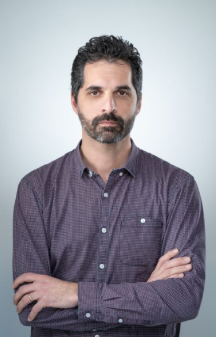
Goran Kreso
Before working with GrundMind, at RIS we had many ideas about where AI could help, but not enough clarity on what to prioritize first. GrundMind helped us turn a broad set of ideas into structured priorities grounded in evidence. We gained a clear view of where AI could create the most value, where the real workflow gaps were, and which steps were worth implementing first.”
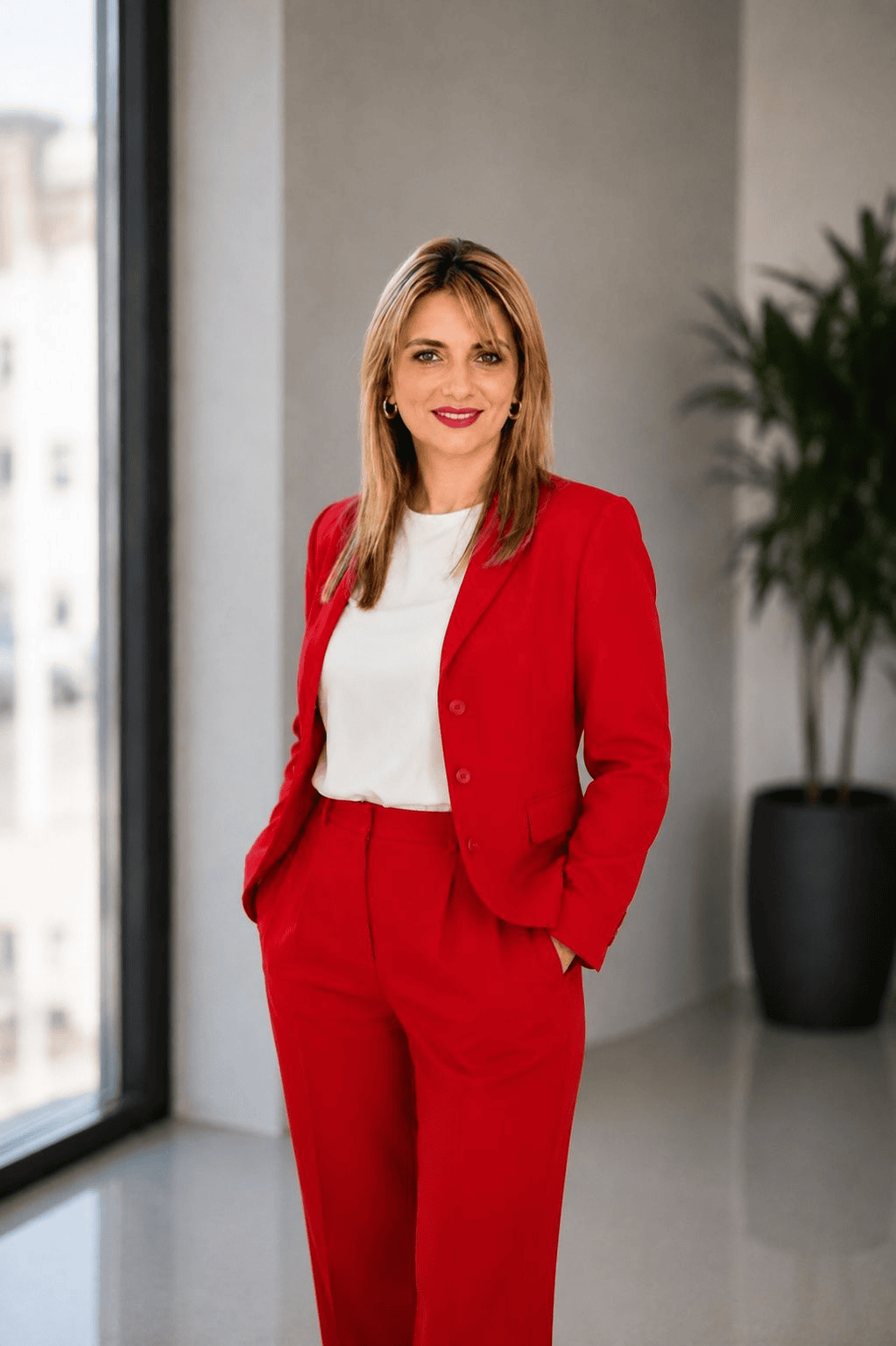
Snježana Vrkić
GrundMind helped us recognize that our people were ready and already using AI effectively. They were experimenting, improving their results and checking the answers. What we were missing was a shared way of turning those individual practices into a consistent team capability. The analysis made that gap clear: useful knowledge remained with individuals, approaches varied, and common rules for tools, data and review had not fully caught up with everyday use. For us, this changed the conversation about AI adoption. We could see that the next step was to redesign how work flows through the team, share what already works and establish clear governance. GrundMind helped us understand what it would take to make the value of AI repeatable across the organization.”

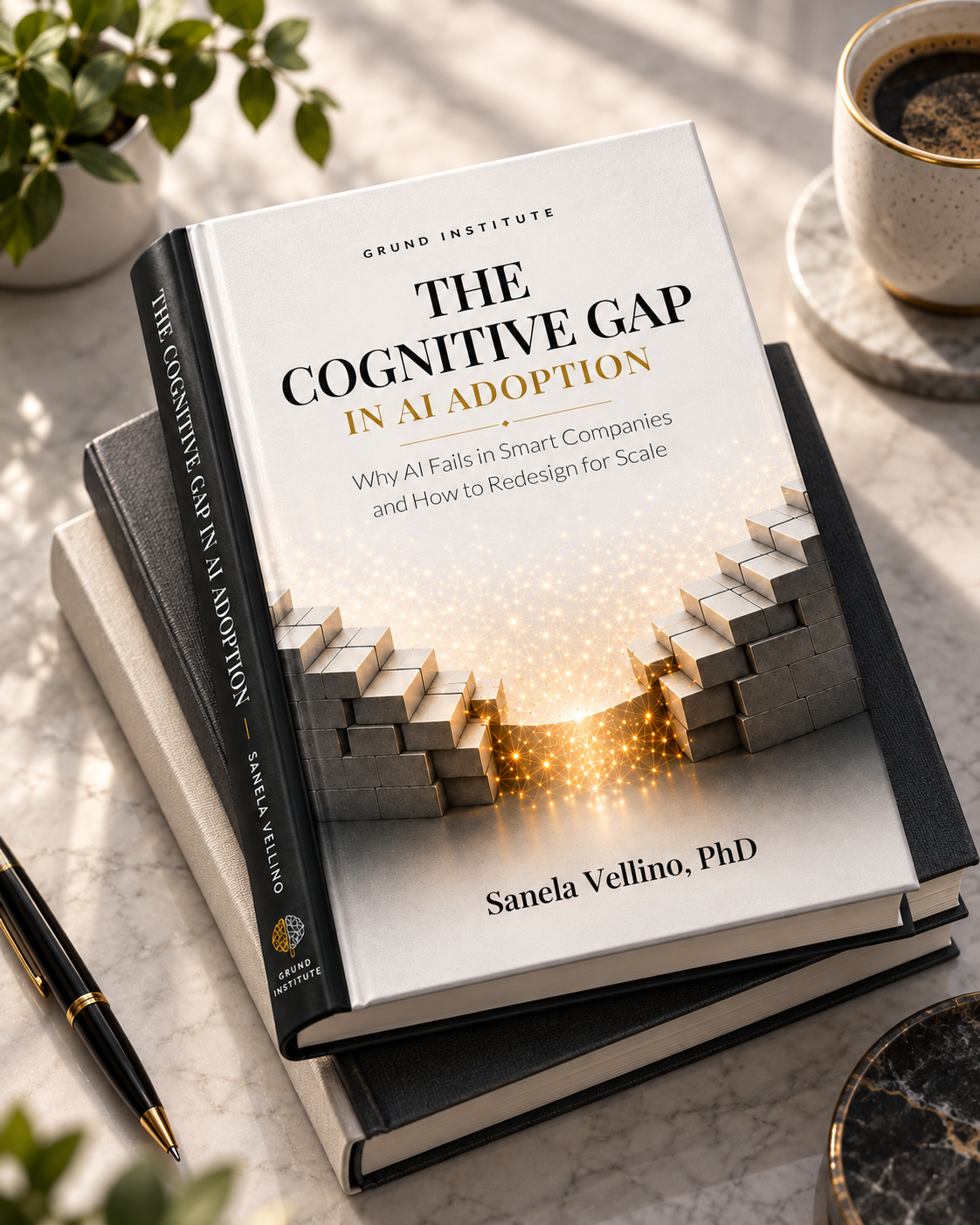
The Cognitive Gap in AI Adoption
A research-led look at why AI fails in smart companies, and how to redesign organizations so it can create measurable value.
Discover the book